Web Design
Website Design for Irrigation and Sprinkler Companies
A homeowner with a geyser in the front yard types the problem, not your name. Here is what an irrigation website needs so that search ends with a call to you.
Get a Quote →A homeowner with a geyser in the front yard types the problem, not your name. Here is what an irrigation website needs so that search ends with a call to you.
Get a Quote →Website design for irrigation and sprinkler companies comes down to three things: a page for each job, a visible license number, and one-tap calling. Repair, new installation, drip systems and seasonal service each need their own page. Each one answers a different search and a different customer.
Most irrigation searches start with a problem. A broken head in Kingman, a dry zone in Arlington, a leak by the driveway in Bullhead City. The person searching wants to know three things fast: do you fix this, do you come to my area, and how do I reach you. If the page answers all three, the call comes to you.
Irrigation also carries rules most trades do not. Texas, Arizona and Nevada all tie contractor or irrigator license numbers to advertising, and a website counts. This guide covers the pages to build, where the license numbers go, and the questions worth answering before the phone rings.
An irrigation website needs its own plan because repair customers and installation customers search, decide and buy in different ways. A generic landscaping template treats them as one visitor.
The repair customer is in a hurry. Water is running, the bill is climbing, and the first company that looks local and answers gets the job. The installation customer is comparing. That person reads about zones, drip lines and controllers, and calls two or three companies before choosing.
Seasonal customers sit in between. In the Tri-State desert, summer heat drives the calls. In Dallas-Fort Worth, freezes and city watering schedules drive them. A site that only says "irrigation services" speaks to none of these people clearly. That is the difference between a template and web design built for your trade.
An irrigation website needs one page for each service you sell, plus pages for the areas you cover and the proof behind your work. Here is the map.
| Page | What goes on it | Search it answers |
|---|---|---|
| Sprinkler repair | Broken heads, leaks, dead zones, valve and controller faults, how fast you respond | "sprinkler repair Arlington" |
| New system installation | How you plan zones, what changes the price, your warranty, job photos | "sprinkler system installation Fort Worth" |
| Drip irrigation | Drip for beds, trees and desert plantings, conversions from spray | "drip irrigation Lake Havasu City" |
| Seasonal service | Spring startup, fall winterizing, freeze checks, what each visit includes | "winterize sprinkler system Plano" |
| Smart controllers | Weather-based and soil moisture controllers, setup and tune-ups | "smart sprinkler controller installation" |
| City pages | The services you sell in that city, local jobs, local water rules | "irrigation company Bullhead City" |
| About and license | Who you are, your license number, your service area | Trust checks before the call |
The search phrases show the pattern, not volume numbers. List only services you actually sell. A smart controller page also has a real hook. The EPA's WaterSense program says swapping a clock timer for a labeled controller can save an average home up to 15,000 gallons a year. More detail on page structure sits in what a service page needs to rank locally.
No. Keep them apart. A repair page should load fast and push the phone number. An installation page can run longer, with photos, a process and a quote form. Mixing them buries the phone number for the person with water in the street.
Texas, Arizona and Nevada each tie license numbers to advertising, so the safest place for yours is the footer of every page. Each state words it differently.
Put the number in the footer, on each irrigation page and on the About page. It keeps your ads in line, and it answers the homeowner who checks before calling. This is general information, not legal advice, so confirm the current rules with your state board.
Kiss My Grass Social has worked with landscapers, pest control companies, and tree services in the Tri-State area and the Dallas-Fort Worth market for 10 years. Get in touch to talk about your business.
Email: [email protected] | kissmygrasssocial.com
Veteran-owned and family-owned.
Customers call the irrigation company that already answered their question on the page. These are the questions worth answering in plain words:
Watering rules make strong local content because they change by city. Fort Worth, for example, allows sprinklers two set days a week all year and bans them from 10 a.m. to 6 p.m. Check each city's rule before you publish, and update the page when it changes.
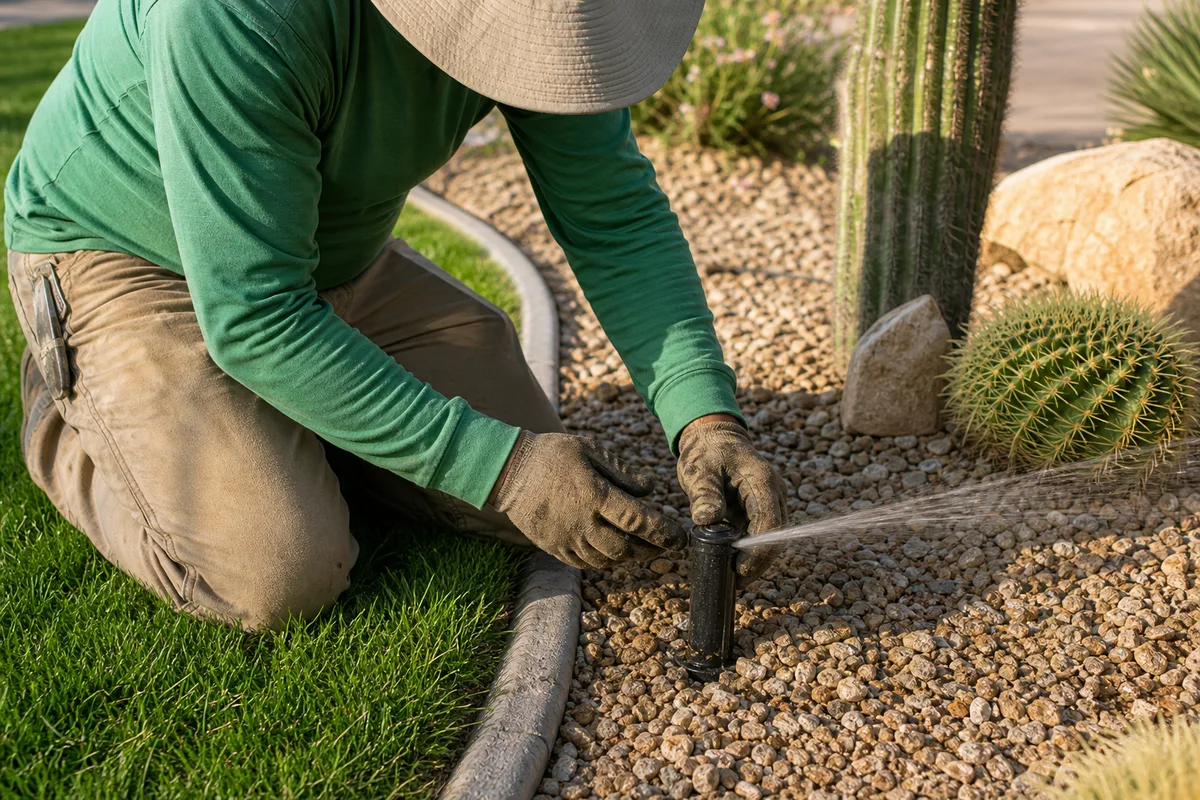
Most irrigation emergencies are found standing in the yard, so the site has to work on a phone first. Put the phone number at the top of every page as a tap-to-call link.
Speed matters too. A page that stalls on cell data loses the customer to the next result. The post on mobile speed for outdoor service sites covers the fixes.
Seasonal pages work for irrigation because demand follows the weather, and the weather is different in each market you serve. Publish each page a few weeks before its season starts.
| Season | Tri-State desert | Dallas-Fort Worth |
|---|---|---|
| Spring | Drip checks and timer resets before the heat | System startup and head adjustments |
| Summer | Leak repair, emitter clogs, heat-stressed trees | Watering-day rules, dry zones, controller tune-ups |
| Fall | Cutting run times as temperatures drop | Winterizing and backflow protection |
| Winter | Smart controller upgrades and conversions to drip | Freeze damage repair and new system planning |
Use your own job photos on each page and name the city. A post on seasonal landscaping marketing covers timing across the year. Weekly Google Business Profile posts can point to the same seasonal pages.
Proof sells irrigation work because most of it ends up buried, and customers cannot see what they are paying for. Show the work before the dirt goes back.
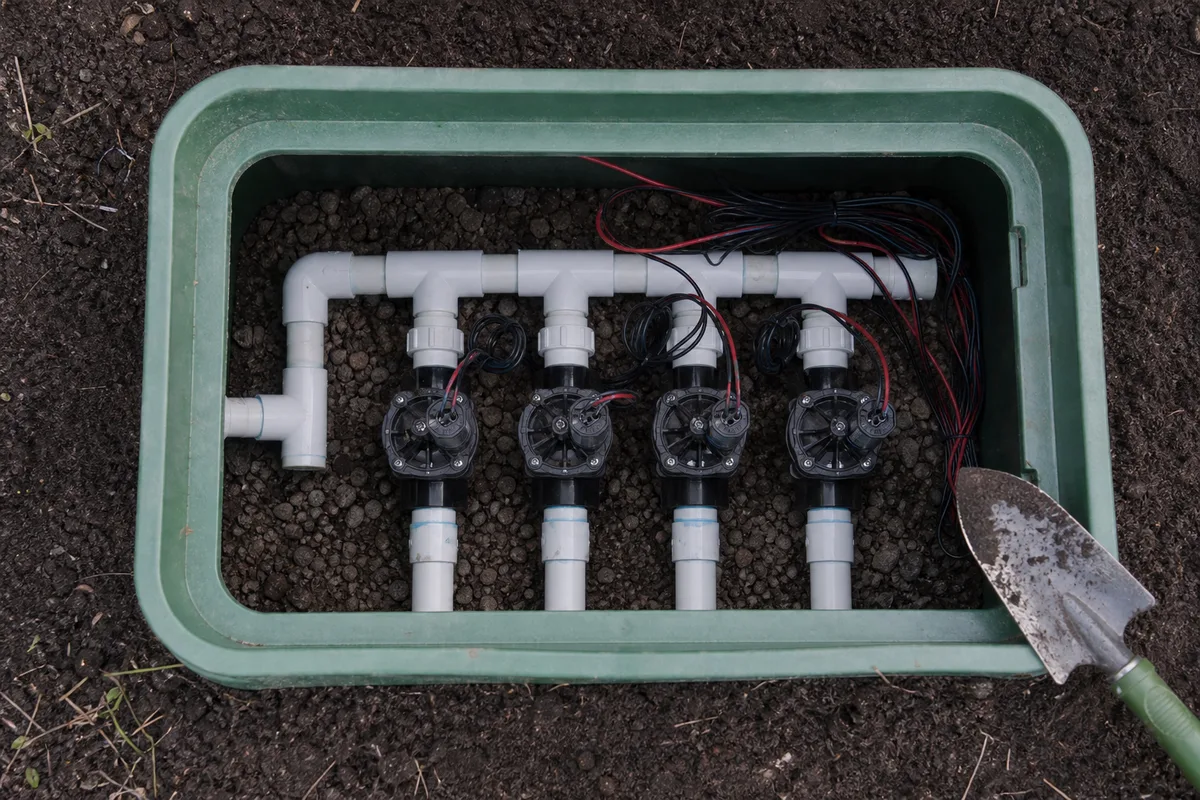
Reviews also help you show up. Google's local ranking help page says more reviews and positive ratings can help a business's local ranking. Ask within a day of the job, and never pay or trade a discount for a review. More ideas for job photos are in before and after photos that win work.
Here are short answers to questions irrigation and sprinkler company owners ask about their websites.
Put what you can stand behind. A service call fee or a starting price for spring startups is easy to publish. New systems depend on yard size, zones and soil, so explain what changes the price instead. Customers who understand the price before they call make better leads.
Yes, if each service gets its own page. Many landscapers sell irrigation work, and customers search the two jobs differently. Keep sprinkler repair, installation and drip on their own pages, and link them from your landscaping pages. One mixed page tries to rank for everything and usually ranks for nothing.
Put it in the footer of every page and on each irrigation service page. Texas, Arizona and Nevada all tie license numbers to advertising, and a footer covers every page at once. Use the exact format your state asks for, such as ROC before an Arizona number.
Not before the service pages are done. Once they are, a short seasonal post before each busy stretch earns its keep. Spring startup, summer watering rules and fall winterizing are the three that match how customers search. Write for the cities you serve, with your own job photos.
Kiss My Grass Social has worked with landscapers, pest control companies, and tree services in the Tri-State area and the Dallas-Fort Worth market for 10 years. Get in touch to talk about your business.
Email: [email protected] | kissmygrasssocial.com
Get a Quote →Tell us about your business and we'll come back with a clear proposal covering scope, approach, and cost.