
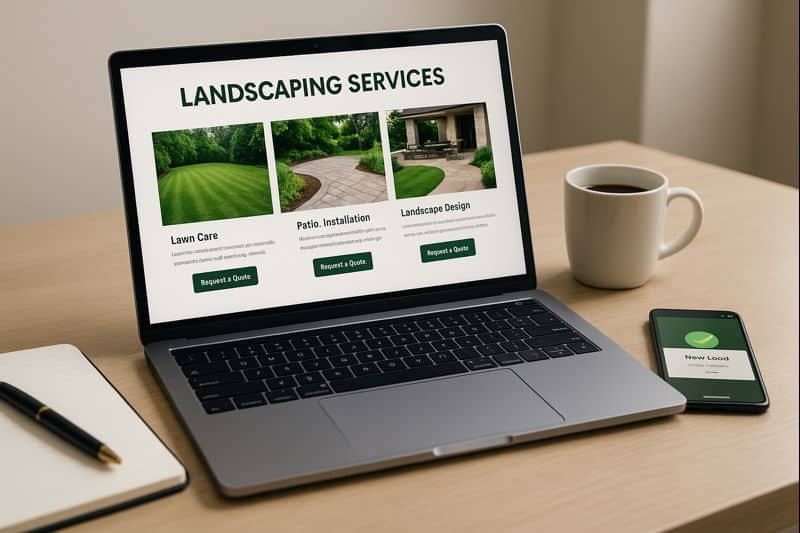
If your landscaping or home service website is getting traffic but not producing phone calls, form submissions, or quote requests, the issue is almost always your service pages. A service page is not just a description of what you do. It is a conversion engine, a digital salesperson that works 24/7 to turn visitors into qualified leads.
In competitive industries like landscaping, lawn care, tree service, irrigation, hardscaping, and outdoor living, your service pages often determine whether a prospect chooses you or clicks the back button to find a competitor. Understanding how to structure service pages for maximum lead flow is one of the most valuable skills a business owner or marketing manager can develop.
This guide breaks down exactly how high-performing service pages are structured, why they convert better, and how you can apply these principles to your own landscaping website.
Why Service Page Structure Matters More Than Design
Many business owners focus heavily on visuals, colors, or animations when building a website. While professional design matters, structure is what actually drives conversions. Structure determines how information is consumed, how trust is built, and how quickly a visitor understands that you are the right solution.
A poorly structured service page creates friction. Visitors have to work too hard to understand what you offer, who you serve, and how to get started. A well-structured service page removes friction and guides the visitor naturally toward taking action.
High-converting service pages share three core goals:
- Clearly explain the service
- Establish authority and trust
- Make it effortless to contact you
Everything else on the page should support these objectives.
The SEO Foundation of High-Performing Service Pages
Before we dive into layout and content order, it is important to understand the SEO role of service pages. Service pages are not blog posts. They are commercial-intent pages designed to rank for buyer-focused keywords.
For landscaping businesses, these typically include:
- Service + city or region
- Problem-based searches
- Comparison or solution-based searches
Examples include:
- Lawn care services in Tarrant County
- Tree trimming near me
- Irrigation repair services
- Hardscape installation company
Search engines reward service pages that are clear, locally relevant, and helpful. The structure of your page directly impacts how Google understands your content and how users interact with it.
H1: Clear, Keyword-Focused, and Client-Centered
Your H1 heading is the most important element on the page. It should instantly confirm that the visitor is in the right place.
A strong H1:
- Includes the primary service
- References the service area when applicable
- Speaks directly to the client’s need
Instead of vague headings like “Our Services” or “Professional Solutions,” use:
- Professional Landscaping Services in Tarrant County
- Expert Lawn Care Services for North Texas Homes
- Reliable Tree Removal and Pruning Services
This structure improves SEO while reassuring visitors that you specialize in what they are searching for.
Above-the-Fold Content: Answer the Big Three Questions
The section visitors see without scrolling is the most valuable real estate on the page. Within seconds, they are subconsciously asking three questions:
- What do you do?
- Who is this for?
- How do I get started?
Your above-the-fold section should include:
- A clear headline
- A short supporting paragraph
- A visible call-to-action
Avoid clutter. This is not the place for long explanations. Think of it as your elevator pitch.
Examples of effective CTAs include:
- Request a Free Estimate
- Schedule a Consultation
- Get a Lawn Care Quote
Make sure the CTA stands out visually and appears multiple times throughout the page.
Trust Signals Early in the Page Structure
Trust is one of the biggest conversion factors for service-based businesses. Visitors are letting you onto their property, around their family, and near expensive assets like homes and landscapes.
High-performing service pages introduce trust signals early, not buried at the bottom.
Effective trust signals include:
- Years in business
- Licensing and certifications
- Service area coverage
- Professional affiliations
- Review snippets or ratings
For landscaping marketing specifically, mentioning local experience and regional expertise is critical. North Texas homeowners, for example, want to know that you understand their soil, climate, and seasonal challenges.
Service Overview Section: Explain the Value, Not Just the Task
One of the biggest mistakes businesses make is listing what they do instead of why it matters.
Instead of saying: “We mow lawns, edge sidewalks, and blow debris.”
Explain the outcome: “Our lawn care services are designed to keep your property healthy, attractive, and resilient through North Texas weather extremes.”
Your service overview should:
- Explain what the service is
- Highlight problems it solves
- Emphasize benefits and results
This section sets the emotional hook that keeps users scrolling.
Breaking Services Into Scannable Sections
Most users do not read service pages word-for-word. They scan. Your structure must support that behavior.
Use clear H2 and H3 headings to break your services into digestible sections. This improves readability and SEO.
Examples include:
- Lawn Maintenance Services
- Seasonal Fertilization Programs
- Weed Identification and Control
- Irrigation and Drainage Solutions
Each section should include a short explanation, benefits, and subtle internal CTAs.
Location-Based Optimization Without Keyword Stuffing
Local SEO is essential for landscaping businesses, but overdoing location keywords can hurt readability.
The best service pages naturally reference:
- Cities served
- Counties or regions
- Neighborhood types
Instead of listing cities repeatedly, weave them into the content:
- Serving homeowners across Tarrant County and surrounding North Texas communities
This approach improves relevance without triggering spam signals.
Addressing Objections Before They Become Barriers
High-converting service pages anticipate objections and answer them proactively.
Common objections include:
- Cost concerns
- Trust and reliability
- Service quality
- Scheduling availability
Address these with sections like:
- What Sets Our Landscaping Services Apart
- Why Professional Lawn Care Saves You Money Long-Term
- Our Proven Process
By the time a visitor reaches your CTA, their concerns should already be resolved.
Process Sections Build Confidence and Clarity
Many prospects hesitate because they do not know what to expect. A simple process section reduces anxiety.
A strong process section might include:
- Request a consultation
- On-site evaluation
- Customized service plan
- Ongoing care and support
This structure shows professionalism and reassures visitors that your business is organized and reliable.
Visual Content Placement That Supports Conversion
Images should support the structure, not distract from it. For landscaping websites, visuals are powerful, but placement matters.
Best practices include:
- Placing images after headings
- Using real project photos
- Avoiding oversized sliders
Images should reinforce credibility and help visitors visualize results.
Calls-to-Action That Match User Intent
Not every visitor is ready to call immediately. High-performing service pages use multiple CTAs for different stages of readiness.
Examples include:
- Get a Free Quote
- Schedule an Estimate
- Talk to a Local Expert
Place CTAs:
- Above the fold
- After major sections
- Near the bottom of the page
This ensures maximum lead capture without feeling pushy.
Internal Linking That Strengthens SEO and Engagement
Strategic internal linking improves rankings and keeps users on your site longer.
Service pages should link to:
- Related services
- Helpful blog posts
- Contact or quote pages
For example, a lawn care service page might link to a guide on how a great website gets landscaping clients, reinforcing authority while supporting SEO.
Mobile Optimization Is Not Optional
The majority of service page traffic comes from mobile users. Your structure must prioritize mobile experience.
Key considerations include:
- Short paragraphs
- Clickable phone numbers
- Sticky CTAs
- Fast load times
A beautiful desktop page that fails on mobile will lose leads.
Measuring and Improving Lead Flow Over Time
Even the best-structured service pages can be improved. Use analytics to track:
- Bounce rates
- Time on page
- Conversion rates
- CTA clicks
Small structural changes can dramatically increase lead flow when tested properly.
Common Service Page Mistakes to Avoid
Avoid these conversion-killing mistakes:
- Walls of text
- Generic content
- No clear CTA
- Poor mobile experience
- Overuse of jargon
Your service page should feel helpful, local, and trustworthy.
Why Professional Structure Outperforms DIY Templates
Many DIY website builders fail because they focus on appearance, not performance. Professional service page structure is based on data, user behavior, and SEO best practices.
A well-structured service page is an investment that continues generating leads long after it is published.
Final Thoughts: Turning Service Pages Into Lead Machines
Learning how to structure service pages for maximum lead flow is one of the smartest moves a landscaping business can make. Your service pages should educate, reassure, and guide visitors toward action without friction.
When done correctly, your website becomes more than an online brochure. It becomes your most consistent source of new clients.
If your current service pages are not converting, it may be time to rethink the structure, messaging, and flow that guide your visitors from interest to inquiry.